

Inspirations
2 January 2026
Mission Manche: Ravenoville, the Origins of Pierres d’Histoire
Along the winding roads of the Cotentin, the discovery of Ravenoville marks the birth of Pierres d’Histoire. Ruins, archaeological revelations, historical research and patient restoration give rise to an exceptional estate, rescued from oblivion.
Mission Manche
Travelling the roads of the Cotentin in search of a monument to save. A quest driven by instinct and a passion for heritage. Ravenoville would become the very first property of the Pierres d’Histoire family.
The Discovery of Ravenoville
In April 2012, the property appeared almost by chance. Seen from the rear, its silhouette was both majestic and dilapidated, bearing witness to a rich architecture whose original purpose was still difficult to understand.
The dovecote, the first clue
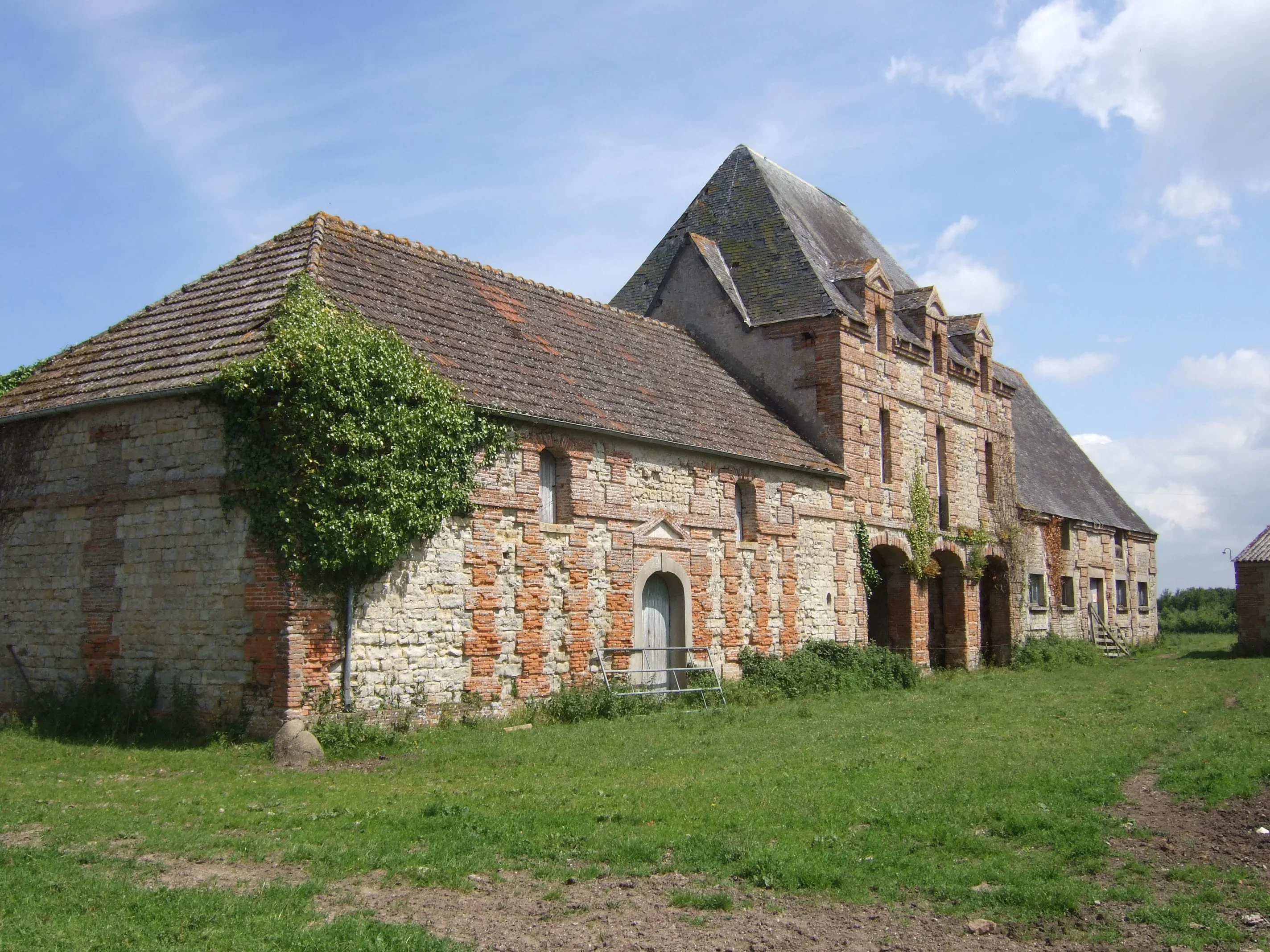
Just beside it, a hexagonal dovecote provided the first answers. It was likely a manor farm, organised around its farmyard. A remarkable feature stood out: richly decorated brickwork, a rarity in the region.
First Visit
No fence, only a few cows. We ventured inside, stepped over a barbed wire fence… and were met with total surprise. The ornamentation proved even richer up close. The dovecote revealed its full height and grandeur. A building set at a right angle, though cut back by two thirds and covered with corrugated metal, still hinted at a former elegance.
The Purchase
Set slightly apart from the historic buildings stood a bourgeois house dating from the post-war reconstruction, seemingly part of the same plot. We knocked on the door. A charming elderly lady opened—it was indeed the owner. We spoke of our work and our desire to save these buildings. True to her Norman roots, she took her time. Step by step, at a very gentle pace, an agreement was reached to purchase this magnificent ensemble.
The Reality Check
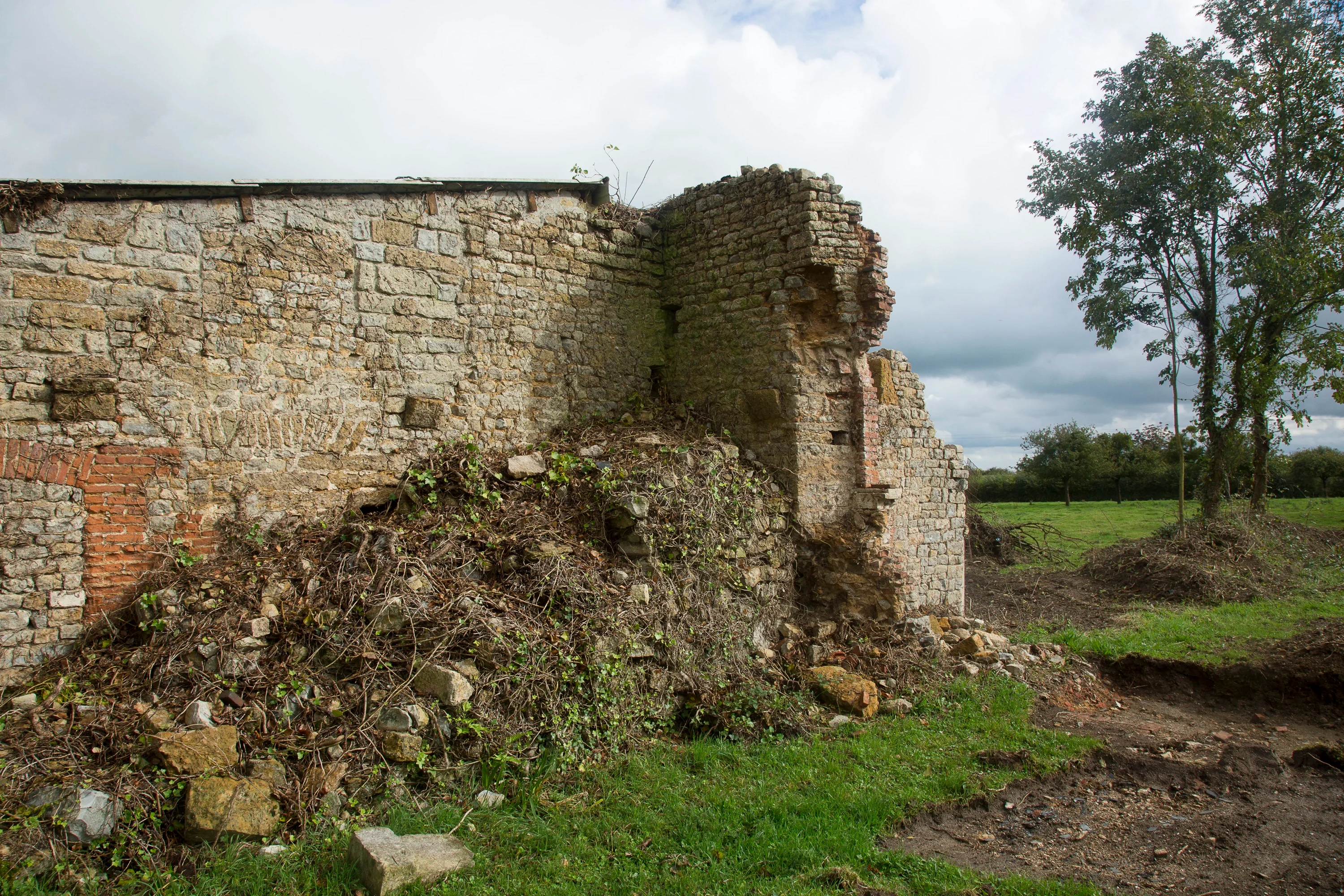
Enthusiasm quickly gave way to reality. The dovecote had lost half of its roof. A broken elm beam hung precariously in the middle of the circular space. The stone staircase stood by sheer miracle. The cellar overflowed with damp, yet the cider bottles were still there.
A Severely Altered Manor
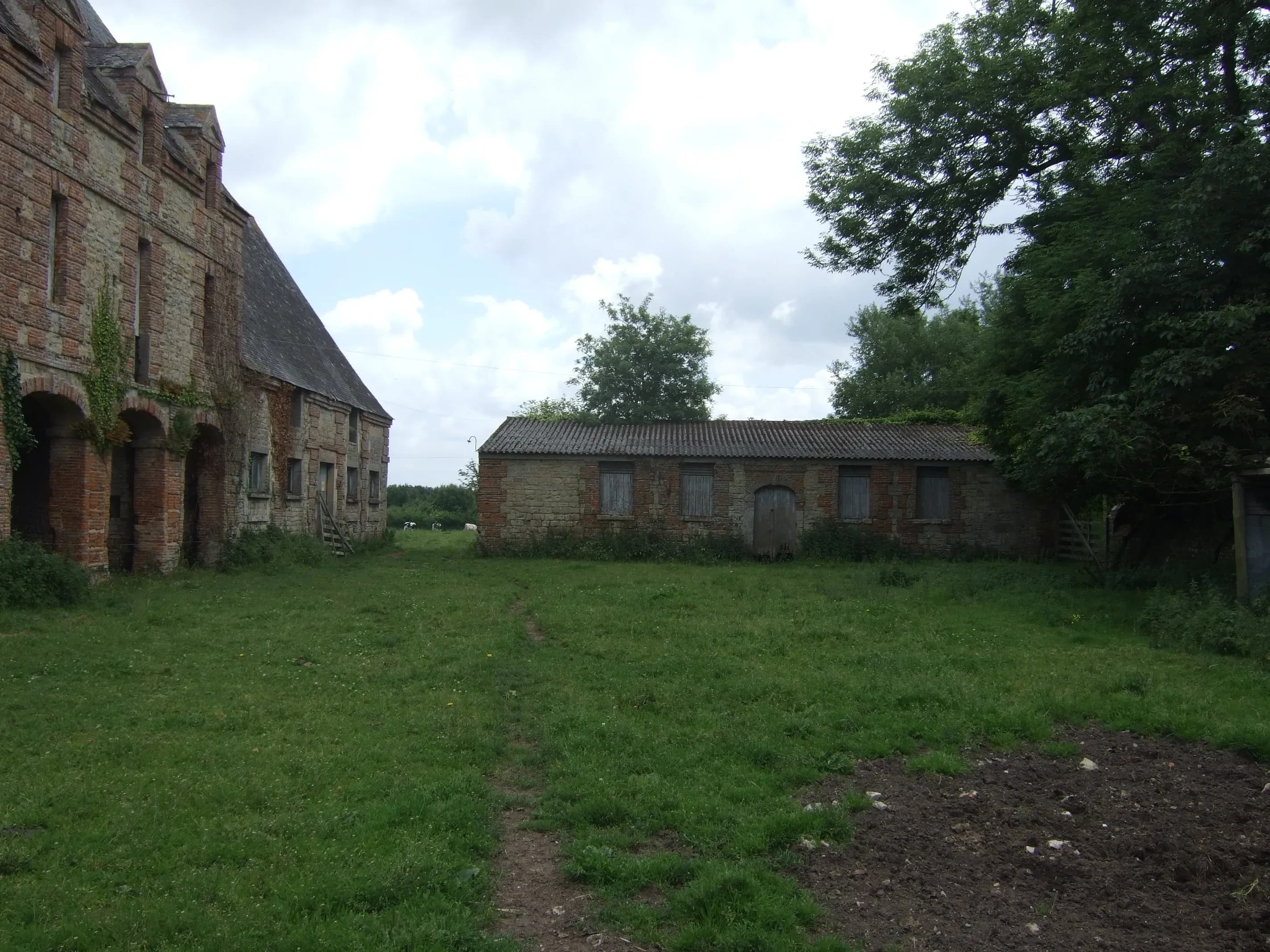
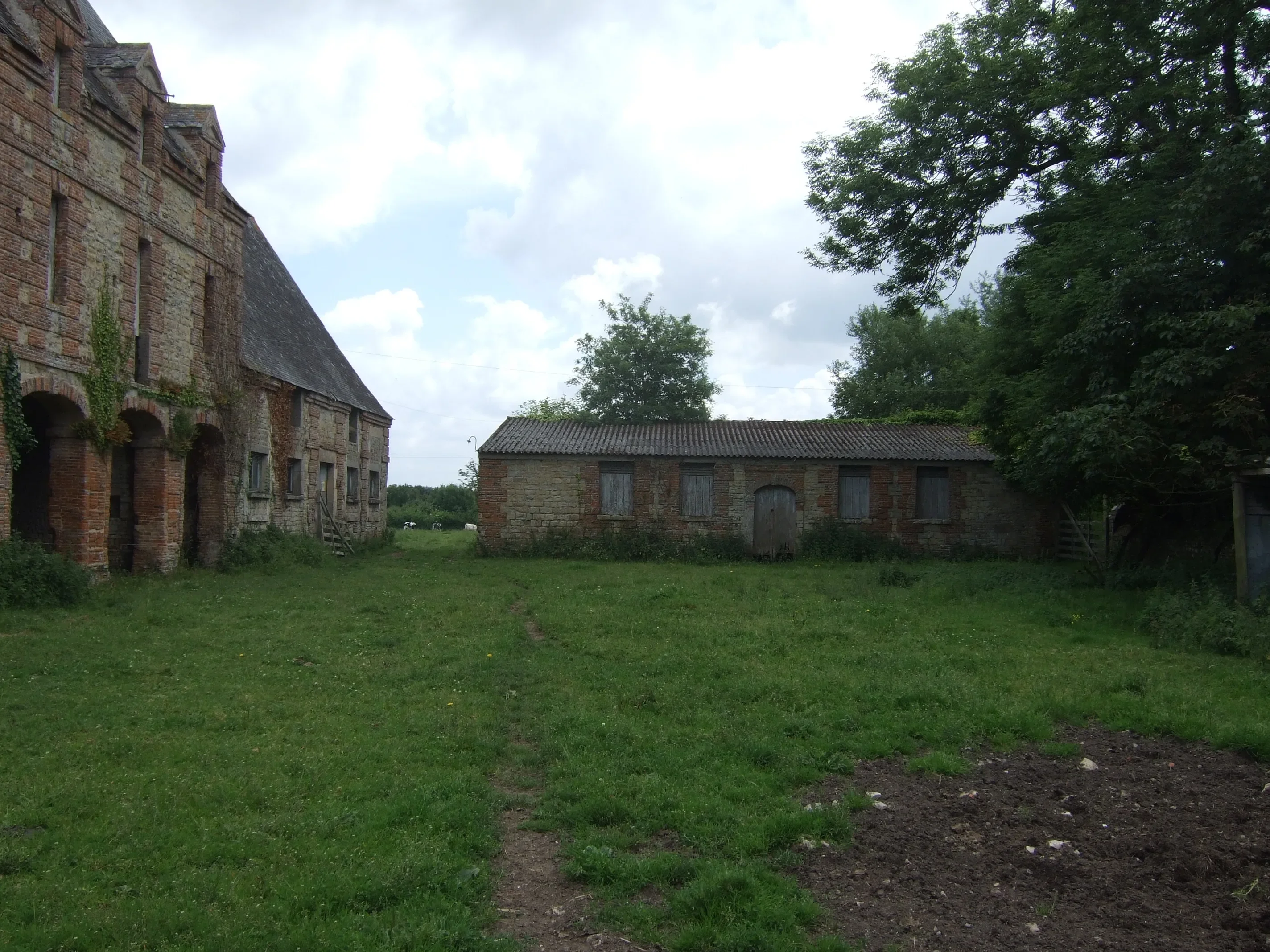
The left-hand section of the manor had seen its roof burn down thirty years earlier. A temporary timber frame and mechanical tiles had replaced the original structure, whose outline could still be guessed on the walls. The central section served as agricultural storage: two former floors remained several metres above ground, beneath a roof more than half gone. A fine stone staircase, of which only the first steps survived, confirmed that this was indeed an old manor house.
Forgotten Outbuildings
The right-hand section retained its original roof, but its façade had been disfigured by openings made necessary by its use as a cowshed. On the ground, an old mechanical slurry conveyor system remained. At right angles, another building, forlorn beneath its corrugated metal lean-to, nonetheless revealed the same brick decoration, bearing witness to its former elegance.
Research and Revelations
Keen to understand the history of these buildings, research began. A specialist spoke of a château built in 1750 and uncovered architectural plans, façade sketches and old postcards. The problem: the château no longer existed. While exploring the grounds with the masons, the foundations reappeared. Perimeter walls, Valognes stone floors, the staircase, the kitchen garden… everything resurfaced. The original plans matched perfectly. The magic began.
Understanding the History
Two discoveries proved decisive: a stone in the dovecote engraved with the date 1619, and an old postcard showing the right-angled building with its distinctive gabled dormers. The original ensemble therefore consisted of a manor house, a dovecote and stables built together in 1619. When the château was constructed in 1750, these buildings became the estate’s outbuildings, explaining their great elegance.
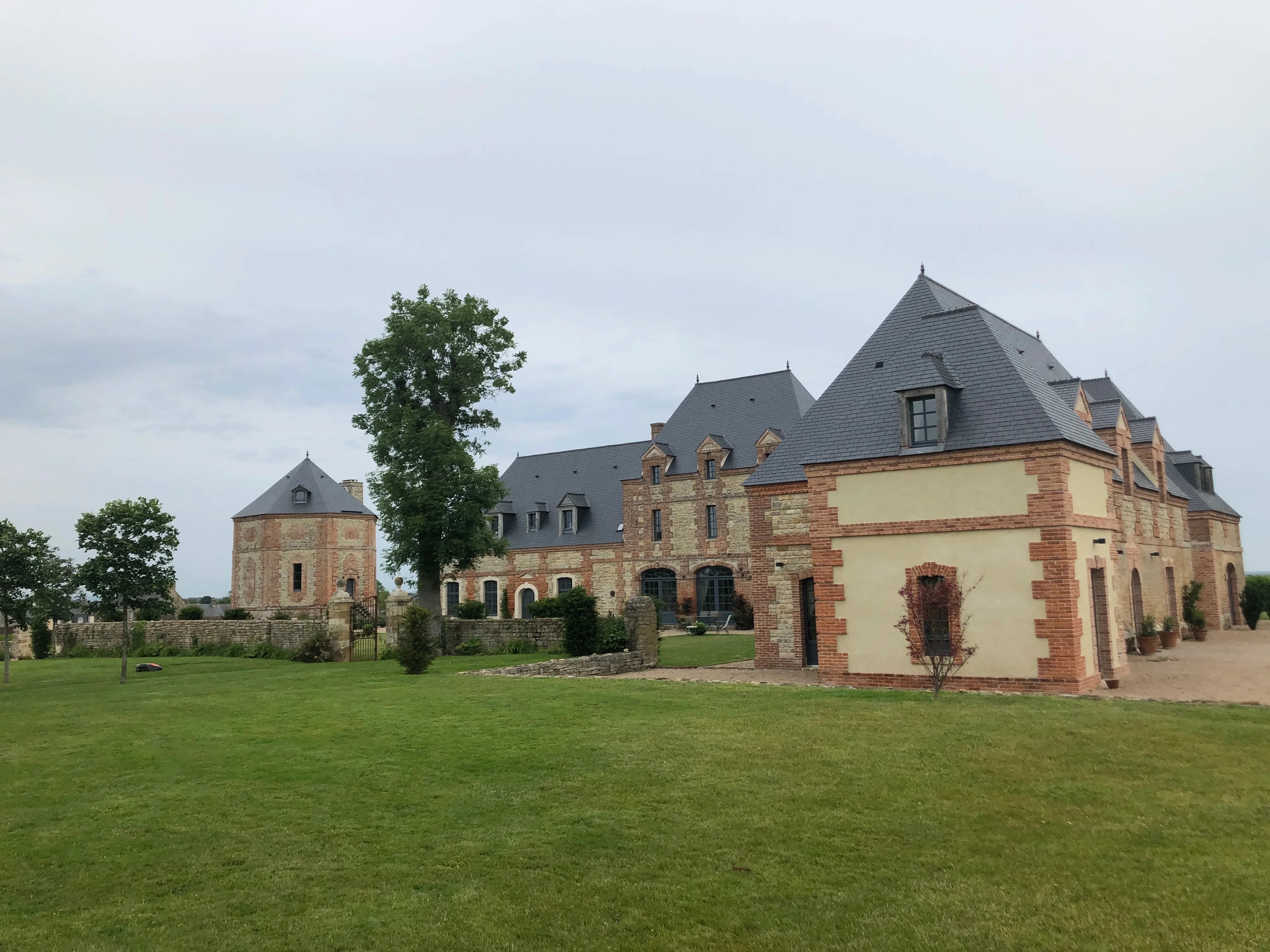 An Ambitious Programme
Priorities quickly became clear: restore the dovecote as a unique holiday cottage, restructure the park, bring the manor and its wings back to life, and finally rebuild the former stable pavilion. Ravenoville became a founding project—demanding, yet profoundly inspiring.